Thursday, May 8, 2025

CompGeo Online Professional Total Compensation Library - Yearly Forecasts Now Covering 2027 -2030

The CompGeo Online Professional Total Compensation Forecast Library from ICT/Clayton Wallis is an online Salary Survey and Benefit Research site.

National and Regional Total Compensation Forecast options provide 24x7 Forecast Library access.CompGeo Professional Total Compensation Forecasts are The Trusted Choice for Reliable Salary and Benefit Trend Analysis℠.

The CompGeo Online Professional Total Compensation Forecast Library now includes Salary and Benefit yealry cost projections now from 2027 through 2030 - an truly unique feature in the Salary and Compensation Forecast Business Realm..

Monday, April 7, 2025

Human Capital Systems, Analytics and Data Mining Now Available in Paperback Edition


Human Capital Systems, Analytics and Data Mining includes Relational and Dimensional Modeling Tutorials with Data Modeling of Human Capital Information Database Systems that include special emphasis on Compensation Data Structures and Analytics.

Detailed Tutorials cover Human Capital Databases from Relational to Dimensional which are then exposed to in depth Online Analytical Processing (OLAP) and Data Mining Projects.  Coverage of Compensation Systems include Extensive Original Research in Gender Based Pay Equity Issues through the lens of Comparable Worth.  Replication of the Pay Equity research with New Findings is included in Tutorials throughout the text.

Development of OLAP Databases and Human Capital Data Mining Projects further exploring contemporary Human Capital Research are the main focus of the book.  Also included are development of Human Capital Information System Interactive Dashboards that effectively visualize recommended internal research methods along with detailed Tutorials on how to create and maintain the Dashboards.  Dashboard development are mainly concentrated on Compensation Metrics and Analytics.

Monday, February 3, 2025

Human Capital Systems, Analytics and Data Mining includes Power BI Interactive Dashboard Tutorials and Templates

Human Capital Systems, Analytics and Data Mining, ISBN 9781498764780 - CAT# K29042, is now available in Paperback and includes extensive Tutorials for SQl Developer Data Modeling,SQL Server Data Mining and Power BI along with downloadable templates.

Human Capital Systems, Analytics and Data Mining is a Practical Guide for Human Capital Practitioners with Pay Equity and Job Mobility Research Based on Jobs of Comparable Worth. Extensive Tutorials throughout on Database Design, Analytics, Data Mining and Dashboards. New Pay Gap Research Findings included in the book reveal discovery of Gender Pay Gap Truths and Fictions.

Tuesday, January 7, 2025

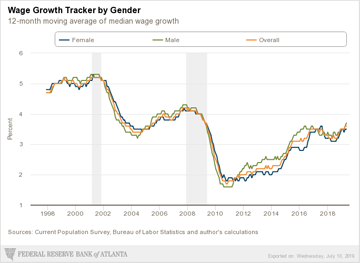
Yearly Wage Growth - Gender vs Age

The Federal Reserve Bank of Atlanta Wage Growth Tracker segregated by Gender based on the 12 month moving averages indicates that from 1997 to the present the overall average Wage Growth Rate for  Females was 3.5% and for Males 3.6%.

Given the findings in my recent book Human Capital Systems Analytics and Mining that for nearly all GS Pay levels in the Federal Government there are virtually no differences between Genders with regard to pay, except at the highest compensation levels.


Based upon the consistency of virtually equal Yearly Compensation Gains across Gender as shown in the Wage Growth Chart since 1997 it may be assumed that Pay Differences between Genders has been largely overstated for the last two plus decades for all job levels below upper management and executive.

In Contrast to the Gender view to the Wage Growth by Age is much different.  Using the same Wage Growth Tracker noted above the 12 month moving averages indicates that from 1997 to the present the overall average Wage Growth Rate for the 16-24 Age Group was 6.7%, for the 25-54 Age Group 3.6% and for the 55+ Age Group 2.4%.

In terms of Wage Growth it is evident the the biggest disparity is not between the Genders but instead across Age Groups.  The most negatively affected are individuals in the 55+ Age Group.  Pay discrimination based on Age is what should merit the most scrutiny and attention.

The importance of research in Pay Discrimination based on Age is underscored due to the fact that individuals are living longer and more depend on some level work during retirement.

Tuesday, December 10, 2024

Human Capital Management Systems, Analytics and Data Mining Book Update Included in WorldatWork Journal Article

My latest book - Human Capital Management Systems, Analytics and Data Mining includes In-Depth HCM Analytics and Data Mining covering Gender Related Pay Equity and Occupational Mobility Research based on Comparable Worth Analysis.

Book Updates are included in - WorldatWork Journal Article: Gender-Based Pay Equity Differences and Upward Occupational Mobility Through the Lens of Comparable Worth The Journal Article can be downloaded in PDF format here.

Tuesday, October 1, 2024

New Book Human Capital Systems, Analytics and Data Mining Now Available in Paperback


My new book Human Capital Systems, Analytics and Data Mining includes Relational and Dimensional Modeling Tutorials with Data Modeling of Human Capital Information Database Systems that include special emphasis on Compensation Data Structures and Analytics.

Detailed Tutorials cover Human Capital Databases from Relational to Dimensional which are then exposed to in depth Online Analytical Processing (OLAP) and Data Mining Projects.  Coverage of Compensation Systems include Extensive Original Research in Gender Based Pay Equity Issues through the lens of Comparable Worth.  Replication of the Pay Equity research with New Findings is included in Tutorials throughout the text.

Development of OLAP Databases and Human Capital Data Mining Projects further exploring contemporary Human Capital Research are the main focus of the book.  Also included are development of Human Capital Information System Interactive Dashboards that effectively visualize recommended internal research methods along with detailed Tutorials on how to create and maintain the Dashboards.  Dashboard development are mainly concentrated on Compensation Metrics and Analytics.

Monday, June 4, 2018

Korn Ferry Study: Women earn 98% of the wages of men. No Gender Wage Gap when jobs are the same.

According to a recent article in Economist.com Women do earn about the same as men when jobs are equal. In the article the Economist reports that according to data from 25 countries, gathered by Korn Ferry, "women earn 98% of the wages of men who are in the same roles at the same employers".
This would seem to indicate that when Gender Pay Gap studies are viewed from a high level, not taking into account Comparable Worth of jobs, that the differences must be distorted by Occupational Career Level Differences rather than discrimination when jobs are the same.

More recent research by this Blog Author in a new book Human Capital Systems, Analytics and Data Mining to be published Spring/Summer 2018 does find that Gender Based Upward Occupational Mobility Issues are the true base issue when examining Gender Based Employment and Pay Status Progress.

Tuesday, May 16, 2017

H-1B Visa Economic mpacts

According to the National Bureau of Ecomonic Research (NBER) in their 2017 published study Understanding the Economic Impact of the H-1B Program on the U.S. wages for Computer Scientists would have been 2.6% to 5.1% higher from 1994 to 2001 had it not been affected by immigration permitted under the H-1B Visa Program. The study also finds that employment for US Workers would have been 6.1% to 10.8% higher in the same period if it not for the H-1B visa program.

The overall opinion of US Tech workers, while generally strongly supportive of diversity in Science and Technology Careers in US companies is that the H-1B Visa program has limited opportunities in those career fields for US workers and has kept salaries suppressed. The ongoing controversy of the H-1B Visa Program could be moderated by stricter standards for administration to insure that the program is not used for importing cheap labor and that qualified US citizen workers are given priority in hiring and promotion especially in Federal, State and Local Government including public colleges and universities.

Monday, March 28, 2016

New Tiered Oregon Minimum Wage Law Upsets Natural Geographic Wage Differentials

Oregon’s new minimum wage law effective July 1st schedules wage increases July 1, 2016 for the next six years.  The law requires Portland Employers to provide a minimum wage $2.25 an hour higher than the minimum wage for non urban countines. This tiered approach is nonsensical at best in that naturally occurring Geographic Wage Differentials  between metro and non metro areas have existed for decades in every state for most occupations.
Many consulting firms have offered for years Geographic Salary Differential studies outlining salary differentials for jobs between different Geographic Locations.  One of the most in-depth reports is the CompGeo Online Professional Geographic Differentials Report  which contains analysis with drill down to the Job Family Level not found in other such studies and is updated yearly.
The artificial differential in minimum pay rates enacted in Oregon ignores the reality that Geographic Salary Differentials occur as a matter of course due to local cost of living differentials, demand for labor and other economic variables.  This ill conceived law will undermine and upset business planning and competitiveness across Oregon and will eventually lead to for profit enterprises being at a severe disadvantage when compared to other states without such unrealistic and anti-commerce wage limitations. 

Tuesday, February 24, 2015

Salary and Total Compensation Forecasts

Reliable Salary and Total Compensation Forecasts need to take into account a wide range of past, present and future planning data from a wide number of sources.  While there are a number of Salary Budget and Structural Compensation Surveys available those are only a very small portion of the data that must be considered in developing algorithms to forecast Compensation Trends.

Geographic Factors, Labor Availability, Occupational Growth Trends, Historical and current Compensation and Benefit levels, Industrial and Service Sector growth and relocation movements and a host of other factors are all in play.

Compensation Forecasts that takes into account the above wide range of factors include

Short and Long Range
US Bureau of Labor Statistics
CompGeo Salary and Compensation Forecast Library

Short Range
US Bureau of Labor Statistics
Hay Group Forecasts
Mercer Compensation Forecasts
Robert Half Salary Guides

Wednesday, April 9, 2014

Do we need another Equal Pay Act?

A new push from Washington, D.C. tries to address the 'Gender Wage Gap' via a central approach to more open information concerning wages to make transparent all Compensation Systems in both private and public organizations.

The Gender Wage Gap phenomenon is often misunderstood and discussed by looking at the issue from 30,000 feet or higher without attempt by most to fully understand the underpinnings of the issue.  When understood in-depth it becomes apparent by Compensation Academics, Researchers and Practitioners that when drilling down into the issue the true problem becomes unveiled.

The true story when fully investigating available data down to comparable jobs assigned in similar pay grades is that Men do not earn more that Women when population by Salary Grade level is taken into account.  In actuality, Women who occupy jobs in higher numbers then Men in Professional and Mid Management Occupations actually earn more since they stay in those jobs longer due to lower numbers in higher level (eg Executive) positions.

So, the notion that Men earn more than Women is incorrect in that the full story is not told in that short statement.  What is true is that Women for any number of reasons do not occupy enough positions in higher level graded jobs as men in certain categories.  The more telling explanation is the 'Glass Ceiling' phenomenon where for an assortment of reasons Women are not found as prevalent as Men in the highest Salary Grade Levels.

What is needed are programs to encourage Women to ascend to higher Levels in Technical and Management Occupations, not additional layers of laws restating what is already 'on the books'.

Tuesday, July 23, 2013

Job and Competency Analysis

Today, all too often, modern multipurpose Job and Competency Analysis Tools and Systems are bypassed for quick and painless semi-automatic online Position Description and Specification Templates.  While apparently time saving and often with face validity a false sense of reliability and validity is in the long run the only result of such shortcuts.

To be truly Professional and legally compliant in Job and Competency Analysis a good comprehensive multi-purpose study approach is required which covers and links Critical and Observable Work Activities with Behavioral Based and Operationally Defined Performance Standards and Essential Employment Requirements.

This high level of validity and reliability in Job and Competency Analysis cannot be synthetically achieved via online Job and Competency Description Repository sites, public or private.

A New OMF Job and Competency Analysis System Free Community Edition** has been released with Multi-Purpose system support that includes Critical And Essential Domain/Competency Linking,Competency Profile Development and Behavioral Based Performance Standards.

The Free Community Edition Release of the OMF Job and Competency Analysis System is available to all Internal Practitioners in Human Resources, Compensation, Labor Research and related fields in both the Private and Public Sectors.

The OMF Job and Competency Analysis System is relatively new  Job And Competency Analysis Approach that uses Acrobat Java Based Technology.

Saturday, June 22, 2013

Aging Salary Survey Data

Aging Salary Survey Data is a required process for any Compensation Professional dealing with more than one Salary Survey Source for a Benchmark Job.  Normally, at least three (3) Salary Surveys from different Survey Publishers is a minimum requirement.  All Salary Surveys have some sampling error - which is normally in the 8 to 12 percent range with a 10% level of confidence (as subject for a later Blog Post).

The process of Aging Salary Survey Data is important to insure that comparisons of internal Salary Structures and Rates are compared with external Market Data at the same point in time.  Leading or lagging some or all of External data will cause distortions in any Direct or Total Compensation Market Analysis.

The Salary Survey Aging Rate is the average annual percentage rate at which salaries are expected to move across given time span. The time span will vary for each Salary Survey Source based upon the effective date of the survey and  the Age-Survey-Data-To date set.

Modern Salary Survey Processing and Analysis Software with store Aging Rates within a Job Level Table or Job Family Table.  The average annual percentage movement of salaries is what is expressed as Aging Rates in the Job Level and Job Family Tables.

The Age Survey Data process calculates Time Correction (Aging) Factors for survey source(s) attached to Survey Job Profile(s) within a range of survey data effective dates.

Salary Structure Modeling

Tools to model,  build and maintain Salary Structures are very important to Compensation Professionals.  Accuracy and maintenance of such structures are critical to Compensation Planning, Analysis and Administration.  

Compensation structure software tools should be capable of modeling and building -

  • Linear and curvilinear salary structures based on open parameters
  • Linear and curvilinear salary structures based on salary survey data
  • Structures with grades/bands that progressively vary in spread
  • Structures with varying numbers of grades/bands.
  • Two and three dimensional charts depicting modeled salary structures.
  • Loading modeled structures into the Salary/Grade Band Tables.
If a regression model had previously been selected, then the last equation produced should be available for review and resuse.

Salary Structure Modeling and Maintenance software helps to insure accurate Salary Structures when initially built and throughout maintenance overtime when salary structure are modified due to salary budget adjustments or other needed restructuring activities such as adding Grades, Bands or Band Zones.

Typical Human Capital Management Systems are able to store Salary Grade Tables, however most lack advance capabilities in Salary Structure Modeling and Building.  Specialized software such as CompBuilder provide such capabilities.

Some Compensation Professionals will build and attempt to maintain Salary Structures using a spreadheet such as Excel. Home grown Salary Structure Tools can often work well, however extreme care is needed to insure that structures built are accurate and precisely maintained over time - which is difficult without software specifically designed for such regimens.


Tuesday, June 18, 2013

Geographic Salary Differentials

Geographic Salary Differential Studies have long been used by Compensation Professionals and others to gauge, estimate and establish policies for adjustments to Salary Grade Structures between different Geographic Locations.

Comparison of actual salary rates and structures between different locations is the main driver in such studies, however some estimate such differences for certain Benchmark Jobs.  This process of estimation often misses the mark in terms of reliability and accuracy.

Reliable Geographic Salary Differential Reports examine not only differences based on salary levels but also Occupation Groupings with the ability to drill down to the Job Family Level.  The Bureau of Labor Statistics, ICT/Clayton Wallis and a few other organizations provide such specificity in these Geographic Compensation Comparison Reports.

Over time Salary Structures that have Differentials built-in for Region/Area Differences in Salary and Wages need to be reexamined periodically as Labor Markets change.  Labor Markets between Regions,  Metropolitan Areas and other locations can and do contract and expand both in terms of employment robustness, occupational opportunities and competitiveness in terms of  Total Compensation.